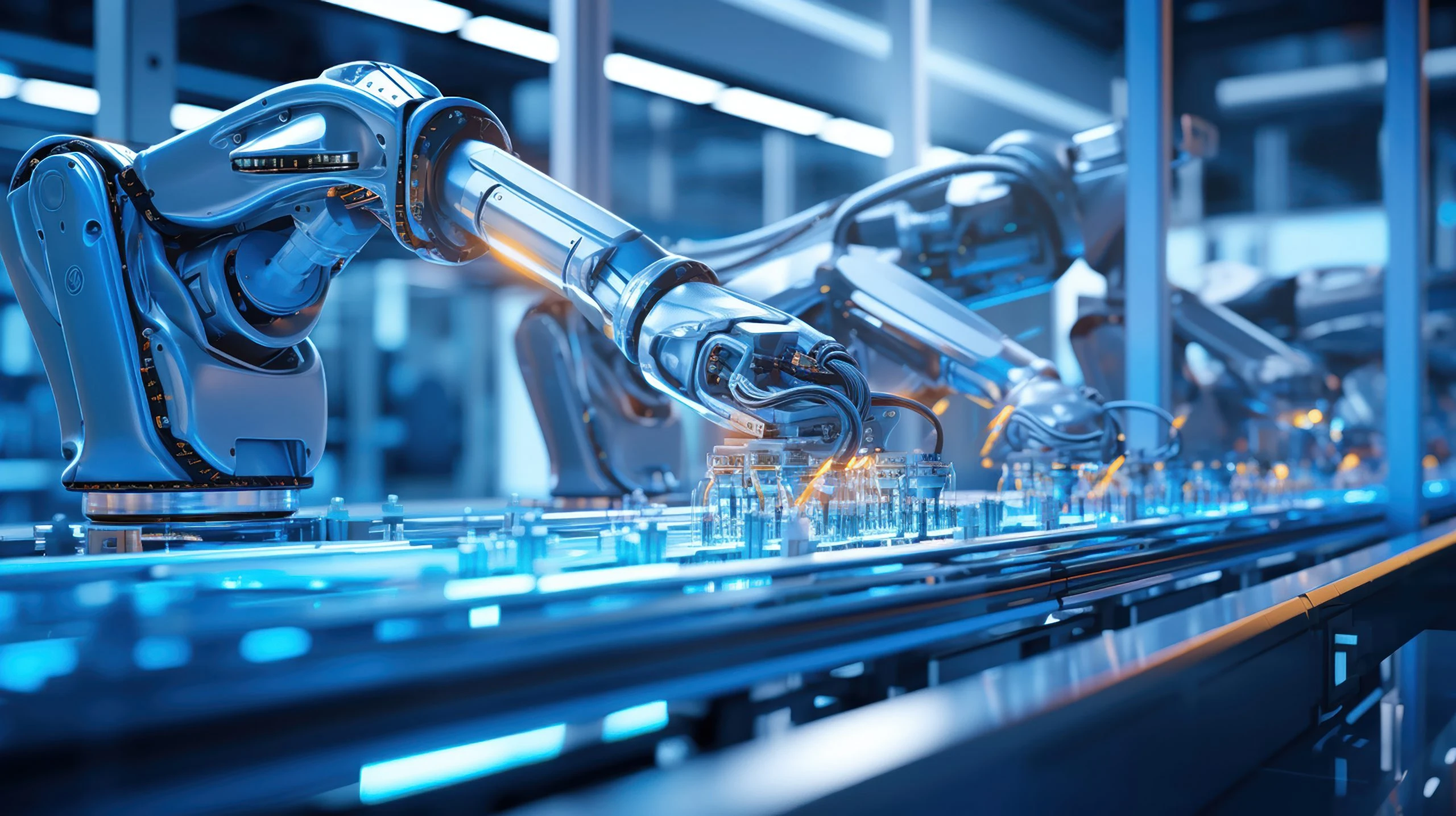
Industrial Innovation
Innovations That Shape the Industry
Innovations That Shape the Industry
Technology convergence drives unprecedented manufacturing transformation
Additive manufacturing, AI, IoT, advanced materials, and digital twins converge to create new manufacturing paradigms impossible with traditional approaches.
Rapid prototyping, simulation, and flexible automation compress product development cycles from years to months, enabling faster response to market demands.
Energy-efficient processes, material recycling, waste reduction, and lifecycle optimization reduce environmental impact while cutting operational costs.
Building parts layer by layer revolutionizes design freedom and production economics
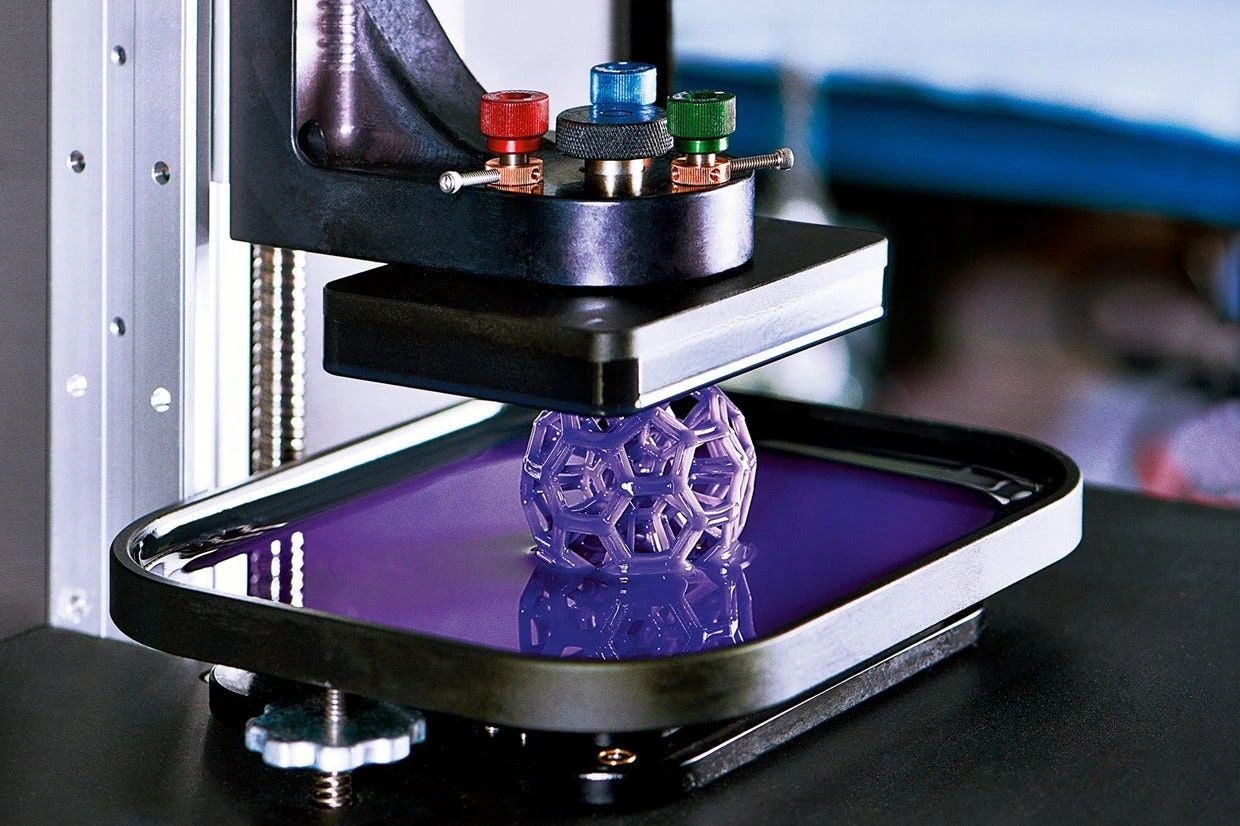
Additive manufacturing builds objects by depositing material layer by layer according to digital 3D models. Unlike subtractive methods that remove material, additive processes use only what's needed, minimizing waste.
Multiple technologies exist: powder bed fusion (metal and polymer), material extrusion, vat photopolymerization, binder jetting, directed energy deposition, and sheet lamination. Each suits different materials and applications.
Selective Laser Melting (SLM) / Direct Metal Laser Sintering (DMLS): High-power lasers fuse metal powder particles together. Layer thickness ranges from 20-100 microns. Materials include titanium, aluminum, stainless steel, nickel alloys, and cobalt chrome.
Parts achieve 99%+ density with mechanical properties matching or exceeding cast/wrought equivalents. Post-processing includes stress relief, HIP (hot isostatic pressing), machining, and surface finishing.
Electron Beam Melting (EBM): Uses electron beam instead of laser in vacuum environment. Higher build rates than SLM with reduced residual stress. Ideal for titanium aerospace components and medical implants.
Directed Energy Deposition: Feeds metal powder or wire into focused energy source (laser or electron beam). Enables repair of high-value components and hybrid manufacturing approaches combining additive buildup with machining.
Fused Deposition Modeling (FDM): Extrudes thermoplastic filament through heated nozzle. Low cost, wide material selection including ABS, PLA, PETG, nylon, and composites. Suitable for prototypes, jigs, fixtures, and end-use parts.
Stereolithography (SLA): UV laser cures liquid photopolymer resin. Excellent surface finish and fine detail resolution down to 25 microns. Used for jewelry masters, dental appliances, and intricate models.
Selective Laser Sintering (SLS): Laser fuses nylon powder. No support structures needed—unsintered powder supports part during build. Strong functional prototypes and production parts with complex geometries.
Multi Jet Fusion / PolyJet: Jet-based technologies deposit material and curing agents simultaneously, enabling multi-material and multi-color parts. High resolution with smooth surfaces suitable for consumer products.
Traditional design rules don't apply. Additive enables organic shapes, internal lattices, conformal cooling channels, and part consolidation impossible with conventional manufacturing.
Topology optimization uses algorithms to distribute material only where needed for structural requirements, creating lightweight, efficient designs. Weight reductions of 40-60% are common.
Lattice structures replace solid material with cellular geometries, maintaining strength while reducing weight and material usage. Adjustable cell size and density optimize local stiffness.
Build orientation affects surface finish, support requirements, and mechanical properties due to layer-by-layer construction. Strategic orientation minimizes post-processing while maximizing strength.
Aerospace: Fuel nozzles, brackets, heat exchangers with integrated cooling channels. Part count reduction through consolidation—GE's LEAP engine fuel nozzle reduced 20 parts to 1.
Medical: Patient-specific implants and surgical guides. Porous titanium hip implants promote bone ingrowth. Dental crowns and orthodontic aligners in production volumes.
Tooling: Conformal cooling channels in injection molds reduce cycle time 20-40%. Complex jigs and fixtures produced on-demand eliminate inventory.
Economics favor low-volume, high-complexity parts. Break-even vs. traditional manufacturing typically occurs at quantities under 1000 units, but varies widely by part geometry and material.
Connecting machines, materials, and information creates intelligent production environments
Wireless sensors monitor temperature, vibration, pressure, humidity, and dozens of other parameters across entire facilities. LoRaWAN, Zigbee, and 5G networks provide connectivity. Edge computing processes data locally, sending only relevant information to cloud systems.
Time-series databases store billions of sensor readings. Data lakes aggregate structured and unstructured information from disparate sources. ETL pipelines clean, normalize, and enrich data for analytics consumption.
Real-time dashboards visualize KPIs: OEE, throughput, quality metrics, energy consumption. Machine learning models identify patterns humans miss. Prescriptive analytics recommend optimal actions.
Industrial firewalls segment networks. Encryption protects data in transit and at rest. Zero-trust architectures verify every access request. Regular penetration testing identifies vulnerabilities before attackers exploit them.
A bearing manufacturer embedded temperature and vibration sensors in grinding machines. ML models correlate sensor patterns with surface finish measurements. When conditions drift toward producing out-of-spec parts, the system adjusts process parameters automatically.
Results: Scrap reduced 78%, rework down 92%, customer returns eliminated. ROI achieved in 7 months.
The future of manufacturing is adaptive, autonomous, and interconnected
Self-organizing manufacturing cells reconfigure automatically for new products. AGVs and AMRs handle material movement without human direction. Production schedules adjust dynamically to optimize for changing priorities—delivery deadlines, energy costs, equipment availability.
Digital twins simulate production scenarios, testing changes virtually before implementation. What-if analysis quantifies impact of decisions. Real and virtual systems remain synchronized through continuous data exchange.
In-process measurement at every step provides 100% inspection without slowing production. AI correlates upstream conditions with downstream defects, enabling root cause elimination. Closed-loop control adjusts processes in microseconds to maintain quality.
Predictive models forecast quality issues before they occur, triggering preventive actions. Digital certificates verify manufacturing pedigree and quality for every serial number, enabling full traceability.
Production schedules optimize for renewable energy availability and time-of-use electricity rates. Energy storage systems level loads and provide backup power. Heat recovery captures waste energy for reuse in other processes.
Carbon accounting tracks environmental impact of every product. Sustainability metrics influence make-or-buy decisions. Circular economy principles guide material selection and end-of-life planning.
Augmented reality overlays guide workers through complex assembly and maintenance tasks. Exoskeletons amplify human strength while reducing injury risk. Voice assistants answer questions and retrieve information hands-free.
AI handles routine decisions while escalating edge cases to human judgment. Continuous learning systems improve from human corrections. Workers focus on problem-solving, creativity, and customer interaction.
Adopting smart manufacturing technologies positions Kazakh industry for global competitiveness. Government initiatives support digital transformation through funding, training programs, and infrastructure development. Universities partner with manufacturers on applied research projects. Technology parks provide testbeds for innovation before full-scale deployment.