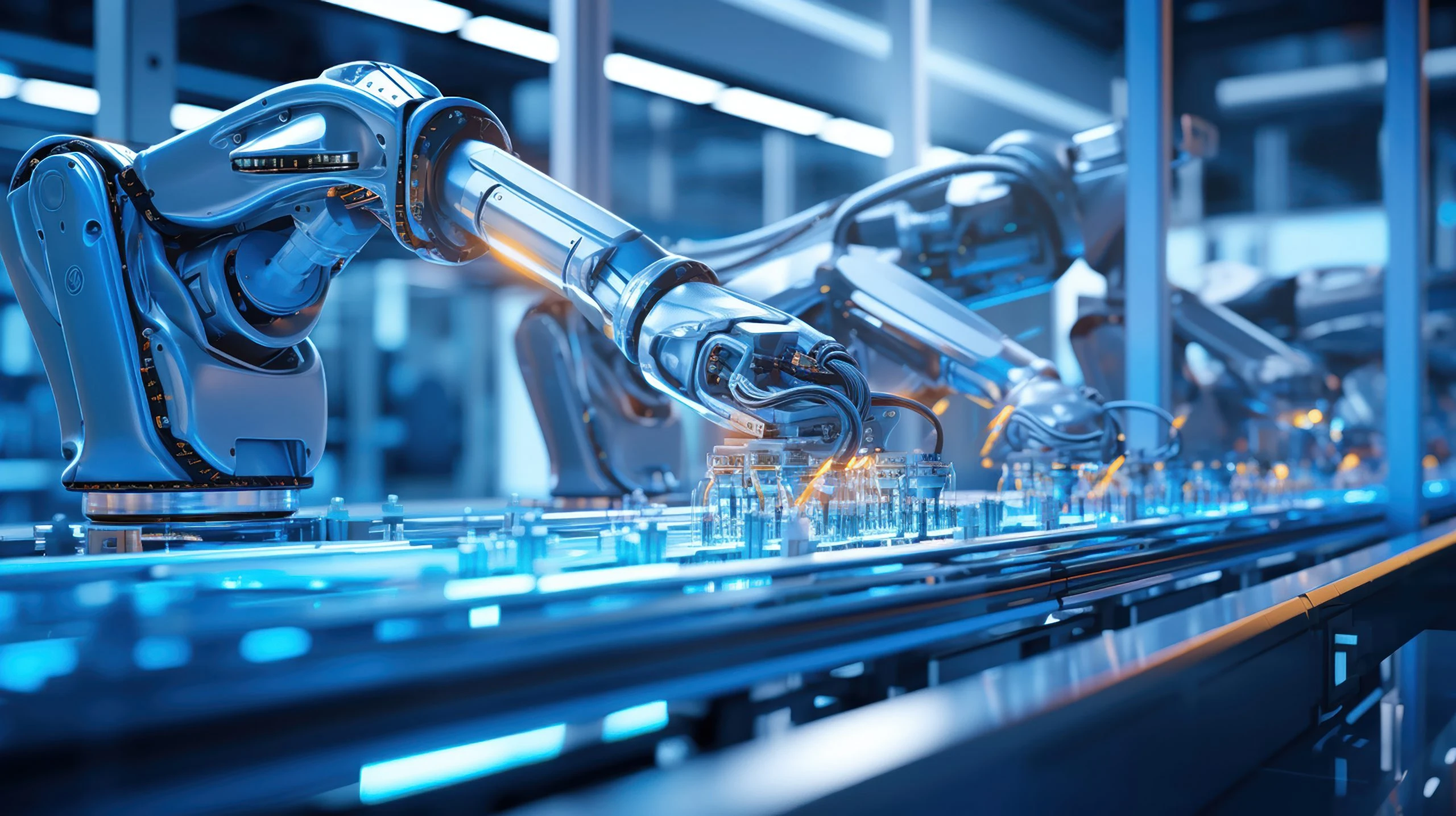
Engineering Tomorrow, Today
Explore the science behind industrial technology, automation and advanced machinery.
Explore the science behind industrial technology, automation and advanced machinery.
The evolution of manufacturing combines traditional engineering with cutting-edge digital systems
From hand-drawn blueprints to parametric CAD systems, industrial design has transformed dramatically. Modern engineers leverage digital twins and simulation tools to optimize every component before production begins, reducing costs and improving quality.
Today's manufacturing equipment runs on sophisticated software stacks. PLC programming, motion control algorithms, and real-time operating systems work together to deliver precision at speeds impossible for manual operation. Software has become the brain of modern machinery.
IoT sensors collect millions of data points from production lines. Machine learning models analyze this data to predict maintenance needs, optimize processes, and identify quality issues before they become problems. Data is the new oil of manufacturing.
Computer Numerical Control revolutionized precision manufacturing
Understanding G-code programming, coordinate systems, and machine kinematics. Learn how instructions translate into precise mechanical movements across multiple axes.
Explore PID controllers, trajectory planning, and acceleration profiles. These algorithms ensure smooth motion while maintaining accuracy and preventing mechanical stress.
CAM software generates efficient toolpaths that minimize cycle time while maximizing tool life. Learn strategies for roughing, finishing, and avoiding collisions.
Preventive maintenance schedules, calibration procedures, and diagnostic techniques keep CNC machines running at peak performance for years.
Intelligent systems transforming production capabilities
Modern cobots work alongside human operators, handling repetitive tasks while humans focus on complex decision-making. Force-sensing technology and safety protocols ensure safe human-robot collaboration.
Six-axis articulated arms provide flexibility for assembly operations. End-effectors can be quickly changed to accommodate different products, enabling flexible manufacturing cells.
Lead-through programming allows operators to manually guide robots through desired motions. This intuitive approach reduces programming time and makes robotics accessible to smaller manufacturers.
Visual programming interfaces enable non-programmers to create complex automation sequences using drag-and-drop logic blocks.
Machine vision cameras capture high-resolution images of products. Image processing algorithms detect defects, measure dimensions, and verify assembly correctness in milliseconds.
3D vision systems enable robots to handle parts with variable positioning, eliminating the need for precise fixturing.
Automated measurement systems track quality metrics in real-time. Control charts identify trends before parts drift out of specification, preventing scrap and rework.
X-bar and R charts, Cpk calculations, and alarm systems give engineers immediate visibility into process capability.
Neural networks learn optimal process parameters from historical data. Reinforcement learning algorithms fine-tune robot movements to maximize throughput while minimizing energy consumption.
Predictive models forecast equipment failures based on vibration signatures, temperature patterns, and power consumption anomalies.
Deep learning models classify defects with superhuman accuracy. Transfer learning enables quick adaptation to new products with minimal training data.
Semantic segmentation identifies specific regions of interest in complex assemblies, guiding robots to precise pick points.
Leading engineers shaping Kazakhstan's industrial future
Working with collaborative robots has transformed our assembly line. We've reduced cycle time by 40% while improving quality. The cobots handle repetitive tasks perfectly, freeing our team to focus on complex problem-solving.

Robotics Engineer, Astana
CNC machining precision at our facility has reached levels I never thought possible. Five-axis simultaneous machining combined with advanced CAM software allows us to produce components with tolerances under 5 microns consistently.

CNC Researcher, Almaty
Implementing Industry 4.0 principles has given us unprecedented visibility into our operations. Real-time dashboards, predictive maintenance, and automated quality checks have reduced our downtime by 60% in just one year.

Automation Specialist, Shymkent
Have questions about industrial technology? We're here to help.