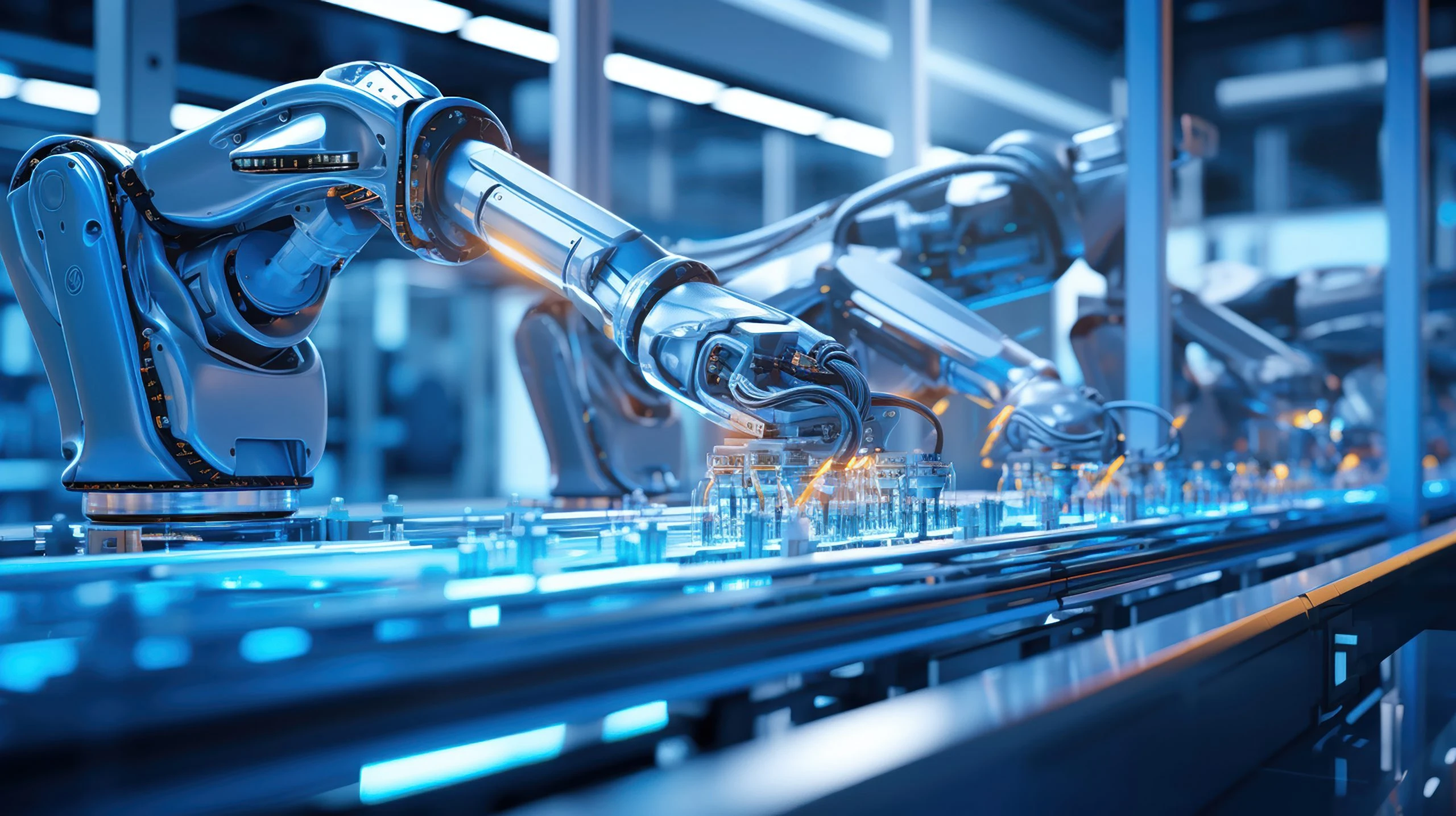
Automation & Robotics
The Power of Industrial Automation
The Power of Industrial Automation
Automation transforms manufacturing by replacing manual operations with controlled mechanical and electronic systems, improving consistency, speed, and safety while reducing costs.
From simple mechanization to fully autonomous factories, automation has evolved through multiple generations. Modern systems integrate sensors, actuators, controllers, and artificial intelligence to create adaptive production environments.
From mechanical cams to digital twins, automation has progressed through relay logic, PLCs, distributed control, and now cyber-physical systems.
Increased productivity, improved quality, reduced labor costs, better safety, and real-time production visibility drive automation adoption.
Modern automation connects shop floor equipment with enterprise systems, enabling data-driven decision making and predictive analytics.
Understanding the hierarchical layers of industrial automation
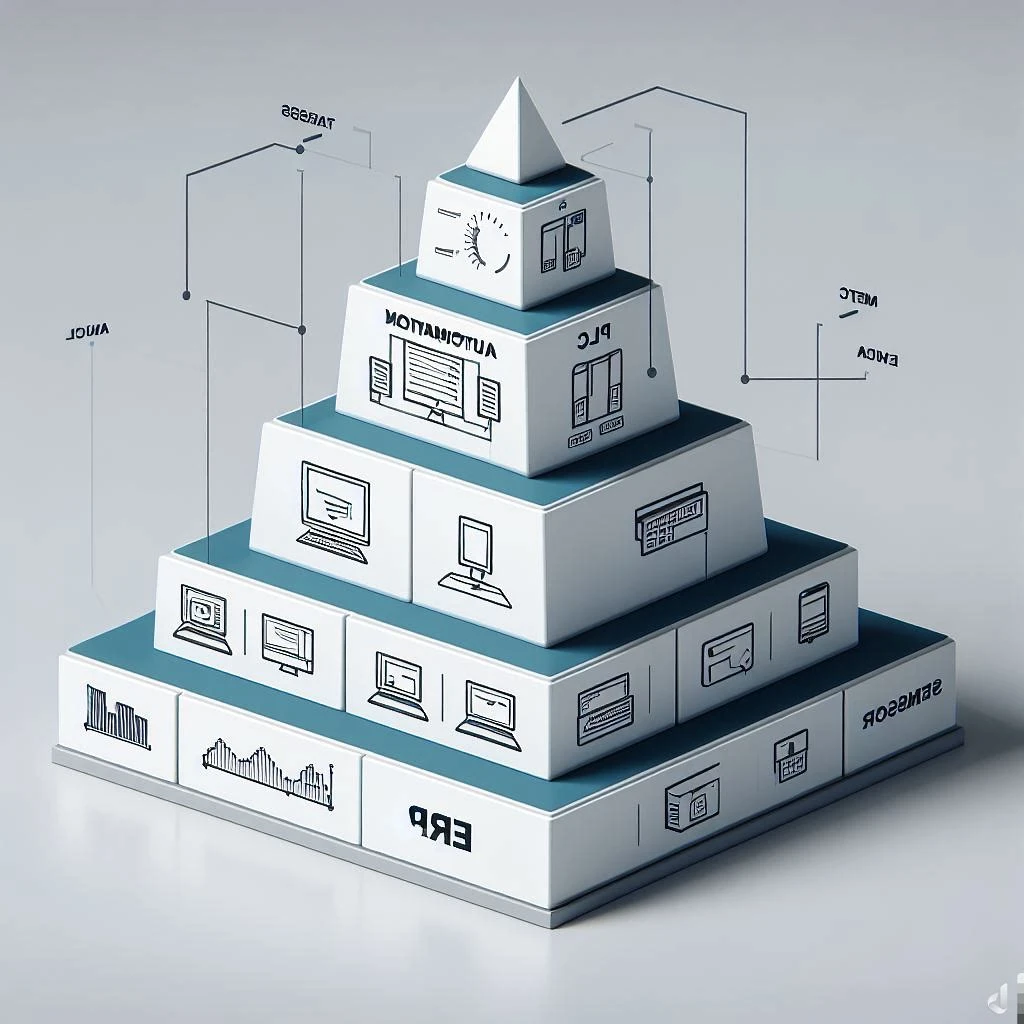
Sensors, actuators, and instruments directly interact with physical processes. Temperature sensors, pressure transducers, proximity switches, and motor drives operate at this foundational layer.
PLCs, PACs, and specialized controllers execute real-time control logic. Ladder logic, structured text, and function blocks implement automation sequences and safety interlocks.
SCADA and HMI systems provide visualization and operator interaction. Trend displays, alarm management, and recipe handling enable effective process monitoring and adjustment.
MES systems coordinate production activities, track materials, manage quality data, and perform scheduling. They bridge the gap between planning and execution.
How humans and robots work together in modern production
Traditional industrial robots operate in safety cages, isolated from human workers. Six-axis articulated arms provide flexibility for welding, painting, material handling, and assembly operations.
Payload capacity ranges from a few kilograms for electronic assembly to hundreds of kilograms for automotive applications. Reach extends from 500mm to over 3 meters depending on application requirements.
Repeatability—typically ±0.02 to ±0.1 mm—ensures consistent positioning cycle after cycle. Path accuracy determines how closely the robot follows programmed trajectories during motion.
Teach pendant programming allows operators to manually jog the robot to desired positions and record them. This intuitive method works well for simple pick-and-place operations.
Offline programming uses 3D CAD models and simulation to develop robot programs without interrupting production. Collision detection and cycle time analysis validate programs before deployment.
Vision-guided robotics add cameras and image processing to enable robots to locate parts with variable positioning, eliminating the need for precise fixturing.
Collaborative robots (cobots) work alongside humans without safety cages. Force and torque sensors detect contact, triggering immediate stops to prevent injury. Power and force limiting keeps collision impacts below safety thresholds.
Rounded designs eliminate pinch points and sharp edges. Smooth, predictable motion reduces startle reactions. Speed and separation monitoring systems adjust robot velocity based on operator proximity.
Applications include machine tending, quality inspection, packaging, and assembly operations where human judgment and robot strength/precision combine effectively.
ISO/TS 15066 defines safety requirements for collaborative operation. Risk assessment evaluates potential hazards including impact, crushing, entanglement, and hazardous materials exposure.
Four collaborative operating modes: safety-monitored stop, hand guiding, speed and separation monitoring, and power and force limiting. Each suits different applications and risk profiles.
Proper application engineering ensures cobots enhance rather than compromise workplace safety. Continuous monitoring and regular safety audits maintain safe operation.
Intuitive HMIs reduce training time and operational errors. Touchscreens with graphical representations of equipment states provide at-a-glance status information. Color coding indicates normal operation, warnings, and faults.
Gesture recognition and voice commands enable hands-free interaction. Augmented reality overlays project information directly onto equipment, guiding operators through procedures step by step.
Mobile devices extend operator reach, allowing remote monitoring and control from anywhere on the shop floor or beyond.
Virtual reality simulations let operators practice robot programming and troubleshooting without production impact. Digital twins replicate equipment behavior, enabling realistic training scenarios.
Competency-based curricula ensure operators master fundamental concepts before advancing to complex tasks. Hands-on exercises build muscle memory and confidence.
Continuous learning keeps skills current as technology evolves. Online courses, webinars, and manufacturer training programs support ongoing professional development.
Artificial intelligence transforms factory operations
Deep learning models classify defects with accuracy exceeding human inspectors. Convolutional neural networks process images in real-time, flagging quality issues instantly.
Machine learning algorithms analyze vibration, temperature, and power consumption to forecast equipment failures days or weeks in advance, scheduling maintenance at optimal times.
Reinforcement learning agents discover optimal process parameters through trial and error in simulation, then deploy winning strategies to physical equipment for maximum efficiency.
Unsupervised learning identifies unusual patterns in sensor data, alerting operators to problems that don't match known failure modes, catching issues before they escalate.
AI adjusts machine parameters in real-time based on measured results, compensating for material variations, tool wear, and environmental changes automatically.
Optimization algorithms balance production targets, equipment availability, material constraints, and energy costs to create efficient production schedules that maximize throughput.
NLP systems extract insights from maintenance logs, work orders, and technical documentation, helping operators quickly find solutions to problems.
Virtual replicas simulate equipment behavior, test what-if scenarios, and optimize settings before changes are made to physical systems, reducing risk and downtime.
Real automation implementations at Kazakh manufacturing facilities
A major automotive parts manufacturer in Almaty integrated six robotic welding stations with vision-guided part loading. The system processes 400 assemblies per shift with 99.7% first-pass yield.
Results achieved:
A steel processing facility deployed IoT sensors and machine learning analytics across 50 critical machines. The AI system predicts bearing failures, hydraulic leaks, and motor issues with 85% accuracy.
Business impact:
Consumer electronics manufacturer introduced eight collaborative robots working alongside 20 human assemblers. Cobots handle repetitive screw driving and adhesive application while humans perform quality checks.
Outcomes delivered:
Food packaging operation deployed high-speed camera systems with deep learning defect detection. The system inspects 200 packages per minute, identifying contamination, incorrect labeling, and seal defects.
Key achievements: